
Support Scientific Research
Expeditions in the service of science
Under The Pole applies its expertise to support scientists and researchers from around the world. All of its expeditions aim to collect cutting‑edge scientific data to advance knowledge of the mesophotic zone (30–200 m) and drive innovation forward.
Under The Pole partners with French and international research institutions to deploy expeditions designed to advance scientific programs. Relying on diving techniques that provide precision, flexibility and minimal impact on marine ecosystems, expeditions and missions open new fields of exploration of the mesophotic zone (30–200 m) and marine animal forests.
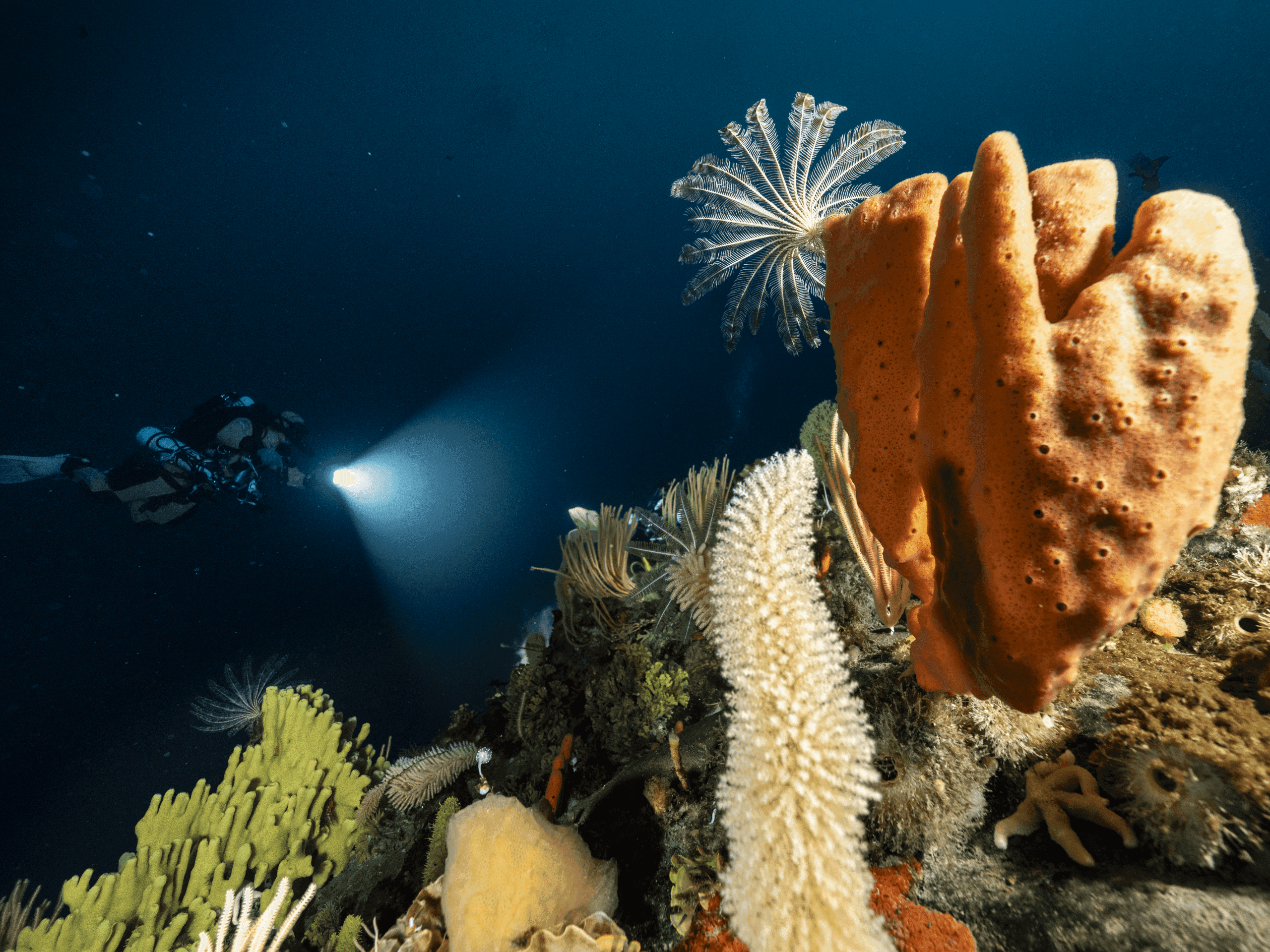
Exploring to better understand the Ocean
In a context of climate disruption accelerating biodiversity loss, understanding the Ocean has become one of the major challenges of the 21st century. A deeper knowledge of underwater ecosystems is essential to identifying and co‑developing solutions to today’s ecological challenges. Guided by its pioneering spirit and mission to advance scientific research, Under The Pole has been collaborating for over 18 years with scientists from around the world, including the CNRS and CRIOBE.
Marine animal forests and the mesophotic zone are the two main research focus areas of Under The Pole. Still largely unexplored, these ecosystems are at the heart of research programs that combine deep‑diving expeditions with a pioneering scientific approach. Divers and scientists participating in the expeditions document, analyze and reveal these vital habitats ; highlighting their extraordinary biological richness and ecological importance. This work is helping to profoundly renew our understanding of the Ocean while opening new avenues for research, conservation and marine protection.
Under The Pole’s expertise and capabilities in diving at depths (from 0 to 200 meters) position it as an essential partner for uncovering the mysteries of critical marine habitats, home to rare species in need of protection. The organization’s technical mastery of deep diving applied to scientific research has already enabled a series of significant scientific breakthroughs in mesophotic zones of polar, tropical and temperate regions.
The DEEPLIFE Scientific Program
The DEEPLIFE scientific program, conducted in collaboration with international researchers, studies marine animal forests in the mesophotic zone (30–200 m) to better understand their role in the functioning of marine ecosystems.
Covering regions from polar to tropical and temperate zones, DEEPLIFE’s observations and experiments enable the precise identification of marine animal forests that are highly threatened by climate change and represent vulnerability hotspots.
Watch this video featuring Lorenzo Bramanti, DEEPLIFE's scientific director, on the role of marine animal forests :
The DEEPHOPE Scientific Program
DEEPHOPE is the initial scientific program, dedicated to studying mesophotic corals, and carried out as part of Under The Pole III.
Mesophotic corals (found at depths of 30 to 200 meters) are among the first victims of rapidly accelerating environmental changes, leading to alarming local and regional species extinctions that must be addressed.
Rich in biodiversity, coral ecosystems are crucial to marine heritage, serving as refuges for species from degraded shallow reefs that are impacted by human activities. These ecosystems play a vital role in supporting the environment and its biodiversity, underwater and on earth.
To ensure their effective preservation, Under The Pole has partnered with nine international research centers to conduct scientific studies, to deepen our understanding of how coral reefs function as a whole and, most importantly, to identify how to better protect them.
- 14months of program so far
- 5archipelagos
- +1000dives
- 4countries involved
DEEPHOPE Scientific Objectives
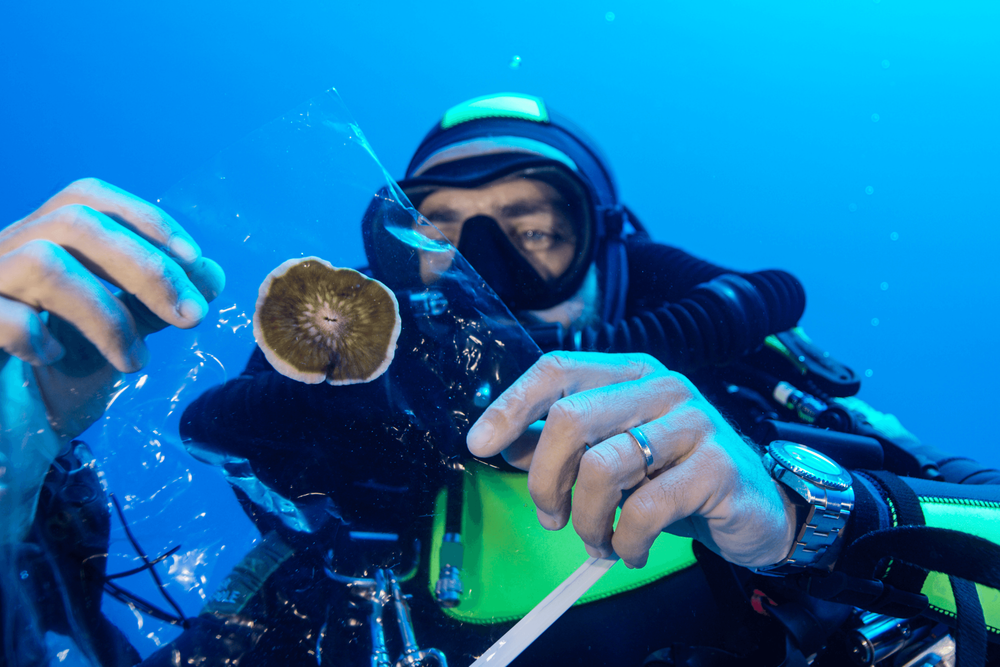
Objective 1 :
Discover and describe mesophotic corals in French Polynesia.
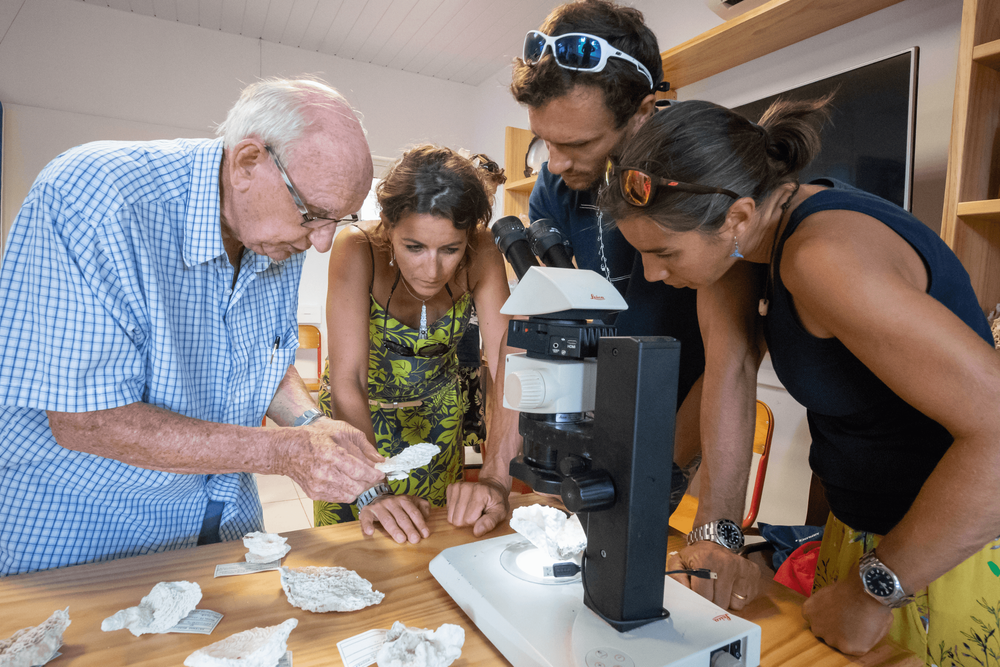
Objective 2 :
Better understand corals and their vulnerability to climate change.
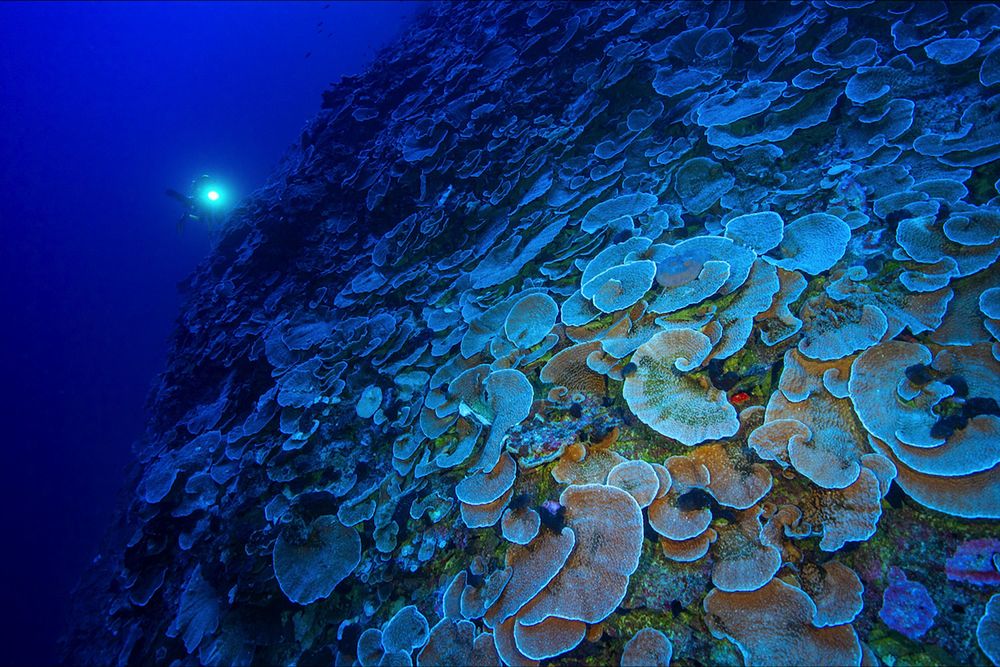
Objective 3 :
Identify the mechanisms by which corals adapt to depth.
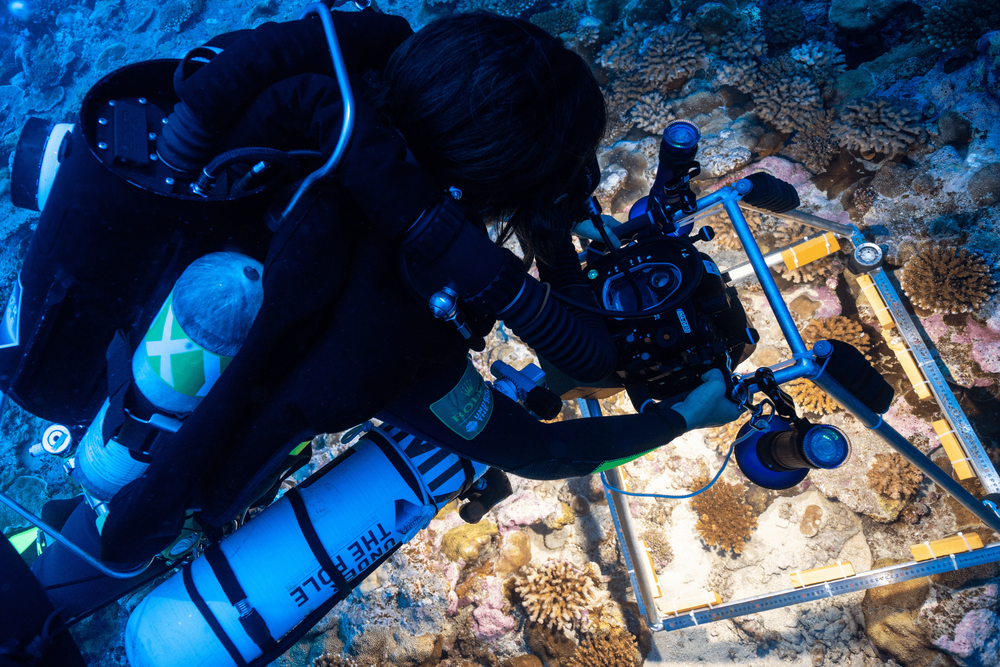
Objective 4 :
Clarify the connectivity between shallow‑water coral populations and those in the mesophotic zone.
« Scientifically, the DEEPHOPE project will forever shape our understanding of mesophotic reefs, thanks to an intensive deep‑diving program carried out by Under The Pole. It has become a benchmark in the world of coral reef exploration and discovery. »